
Berks County Previous Residents Sources by Era
A sound trail uses the source that fits the period and question. The Recorder supplies the ownership sequence, while directories and census material can supply a listed household or geographic context. Estate, newspaper, vital, and map sources add endpoints and context. Exact city-directory year runs have not been published in the local holdings pages, so the table names their repositories without inventing a publisher or range.
| Source | Years It Covers | Where Held | What It Shows |
|---|---|---|---|
| Recorder recording chain | 1752-present office/index claim | Recorder search, counter, originals, and microfilm | Grantor and grantee sequence, legal description, and plan references. |
| Recorder original books | 1752-1953 | Berks County Recorder of Deeds | Original record context and handwriting or transcription clues. |
| Recorder microfilm | 1953-2004 | Berks County Recorder of Deeds | Retained format for the intervening record era. |
| Digital retention | 2004-present | Berks County Recorder of Deeds | Scanned and digitally retained property records. |
| Estate records | 1752-present; online files 1995-present | Register of Wills | Decedent, representative, heirs or beneficiaries, and property trail. |
| City and telephone directories | Exact run not published online | Berks History Center and Reading Public Library | A listed household or subscriber at an address. |
| Berks federal census microfilm | 1790-1930 | Berks County Genealogical Society | Household composition and geographic context. |
| Reading Eagle | 1868-1972 microfilm; RPL digital from October 1989 | BCGS and RPL | Obituary, probate, real-estate, and neighborhood chronology. |
| Sanborn and fire maps | Edition years require verification | Library of Congress and local map holdings | Building footprint, use, and block changes. |
Begin with the parcel and Recorder when the question is ownership or transfer. Shift to the repositories when the question is who lived here before, because an owner is not automatically an occupant and a directory listing is not proof of title.
Berks County Previous Residents: Parcel Start
Open the Berks Property Records Search with a current address, owner, or parcel identifier. Save the current owner spelling, UPI, situs, and legal description, as well as a recorder document number, book-page reference, or transfer reference when the card displays one. The tax portal can help compare mailing fields, but a different mailing address means only that tax correspondence is sent there.
The UPI and legal description are the durable bridge. A street name can be formatted differently, a route can change, and a municipality or postal label can vary across time. Lot, block, subdivision, metes-and-bounds, and plan references make it possible to test whether two differently written addresses concern the same parcel. That is why a property record starts a search for past residents more reliably than a street-number guess.
Tracing Previous Residents Through Berks Deeds
The Berks County Recorder of Deeds record search is the ownership-to-time link. Its Quick Search documents a Real Property department, a Search Term for grantor, grantee, subdivision, document type, or document number, a recorded-date range, and index-only or index-and-full-text search scope. Use the parcel details and acquisition date to find the current owner as grantee, then read the deed rather than assuming the address alone identifies the land.
- Preserve the current parcel UPI and legal description from the county property record.
- Find the current owner or grantee acquisition in the Recorder by party and date.
- Record the prior owner shown as grantor, the instrument, document identifier, legal description, and address as printed.
- Search that prior owner as grantee to locate the earlier acquisition, then repeat the comparison.
- Use a plan, subdivision, lot, or metes-and-bounds description when the historic street string fails to match.
- Grantor and grantee
- The grantor transfers an interest in a recorded instrument. The grantee receives that interest.
- Chain of title
- The documented sequence of recorded property transfers connected by parties, dates, and the same land description.
- Legal description
- The lot, subdivision, plan, or metes-and-bounds text that identifies land beyond a current street label.
Keep a working table with date, party roles, instrument type, document identifier, legal description, printed address, and any needed plan or map. A chain of title records property events. It should not be used to infer that each grantor, grantee, executor, or heir lived at the address.
Berks County Recorder Format Eras
Berks has an unusually clear preservation sequence. The Recorder says its computerized index and image system reaches back to the County's formation in 1752. It also preserves handwritten and typed original books from 1752 through 1953, microfilm for 1953 through 2004, and digitally retained records from 2004 forward. The important breakpoint is format, not an invented online starting year.
A modern hit can lead backward to microfilm or an old record book. Historical pages may be hard to read, and the office statement does not mean every old image is equally easy to download or interpret. When a web result is unclear, use the Recorder counter, phone, or mail channel for a copy question.
Note: Format continuity helps explain where to look next, but it does not turn a deed image into proof of an occupant's residence.
Berks County Address Continuity for Past Residents
Street strings can drift while the parcel remains the same. Subdivisions, route and address-format changes, and municipal boundary names can make an earlier document look unlike a current address. Postal geography adds another trap, because a Reading postal city can extend beyond City limits and boundary communities may use a ZIP associated with more than one county. Compare the legal description and plan reference before discarding a lead.
No official countywide street-renumbering chronology was located. Do not assign a date. Use a subdivision name, lot or block, UPI, metes-and-bounds description, and map or plan when the addresses disagree.
Berks County Previous Residents: Directories and Census
After the deed trail identifies the parcel and period, test the household layer with a local directory, telephone book, census, and newspaper. Reading Public Library's Pennsylvania Room holds archived City of Reading telephone directories, telephone books, Berks County Suburban directories, maps, cemetery, census, church, yearbook, and Reading Eagle material. Berks History Center has city directories, maps, newspapers, church records, and research service. BCGS adds Berks census microfilm and Eagle microfilm.
The specific historical-directory volumes belong with the Berks County city directory collections. For one address, use a precise edition and its abbreviation key, then compare the same surname and address in surrounding years. A directory can be stale, omit unlisted households, or omit renters. Its absence does not prove that someone had moved.
- Match the deed date or a documented address period to the nearest available directory or telephone book.
- Record the spelling, address, spouse or widow clue, occupation, and edition date exactly as printed.
- Pair the result with the nearest released census, then test it against a newspaper notice, map, deed, or estate record.
- Keep a contradiction visible instead of merging people only because their surnames look alike.
BCGS confirms Berks federal census microfilm from 1790 through 1930. It has Reading Eagle microfilm from 1868 through 1972, while RPL reports digital Eagle access beginning in October 1989. The gap in those stated online and microfilm runs should be disclosed, not filled with invented coverage.
Berks County Previous Residents and Estate Files
An estate can close a property story when a known owner died or a title moved through probate. The Berks Register of Wills genealogy service reports estate records from 1752 to the present. Online estate files from 1995 forward can be viewed free; downloads are listed at $0.50 per page plus a $3 transaction fee. The office directs researchers with a pre-1992 file question to contact the office. Check access and redactions in the individual file.
Estate material may identify a decedent, estate representative, heir or beneficiary, dates, and property interests. Those roles differ. An executor is not necessarily an heir, and an heir or beneficiary is not necessarily a past resident of the parcel. Pair a probate lead with the deed description, a period directory, and a dated newspaper notice before drawing a household conclusion.
The Pennsylvania Department of Health genealogy records page is another official route for the broader vital-record context around an estate.
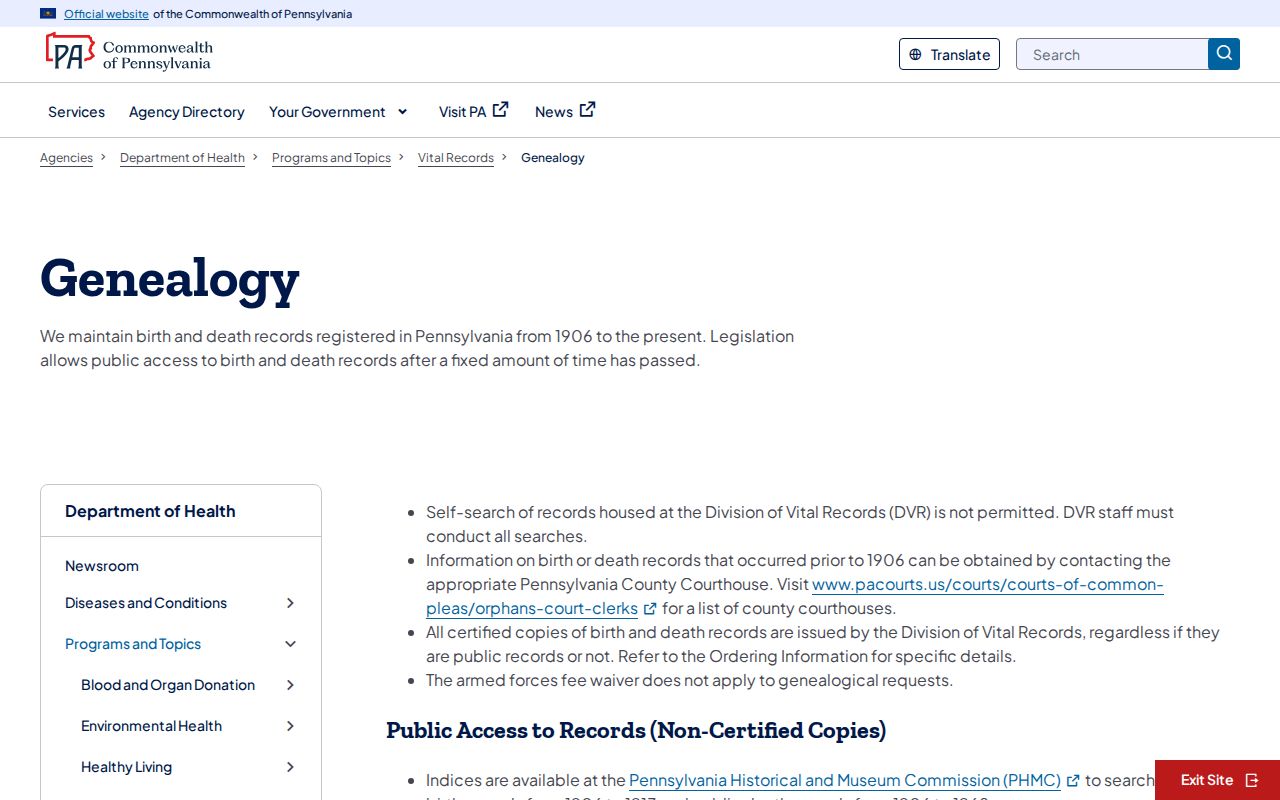
The genealogy capture belongs at the endpoint of a household trail, where a documented event date can be compared with the local Register's historical index and the property record sequence.
Berks County Previous Residents and Vital Context
The Pennsylvania State Archives birth-records resource explains the public historical pathway. Birth records become public after 105 years and death records after 50 years. Before the statewide system began in 1906, Berks and Reading registers are part of the local sequence.
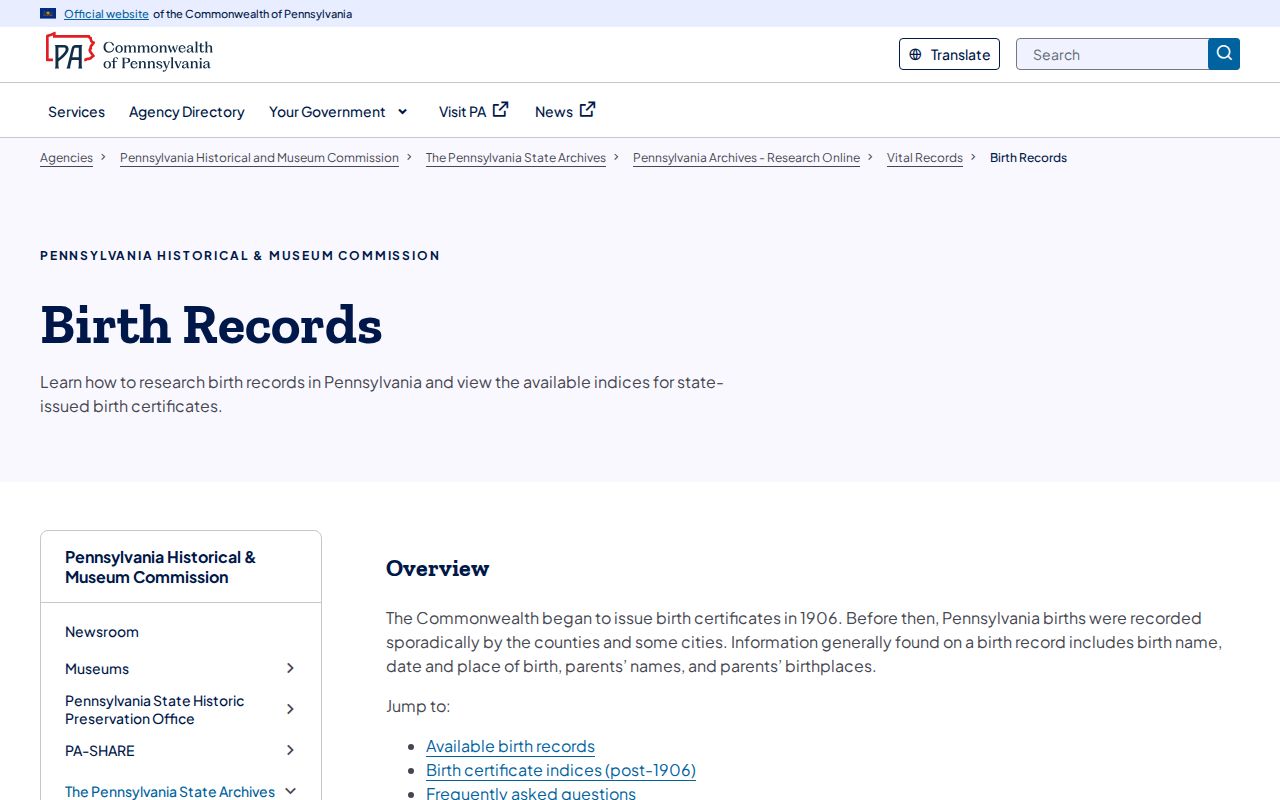
The archival record provides family context only after the address and identity evidence agree. It does not establish a shared residence.
Berks County Maps Need Title Verification
Maps can connect a legal description to a block or building footprint, but a Sanborn edition must be verified by exact municipality and title before its year is stated. The Library of Congress Sanborn collection and local map holdings are the documented starting places. They can add building-use or street-sequence context, not a complete household list.
The Pennsylvania State Archives research guides offer another official route for county and municipal archival research when an online property result runs out.
The guides image supports the fallback path: verify the local title and edition, then use the map beside deeds, directories, and census material rather than as a stand-alone answer.
Berks County Previous Residents and Marriage Records
The Berks County marriage-license office is a local vital-record custodian that can help place a documented family event alongside the deed and directory timeline. Marriage information is a family-history lead, not an address roster.
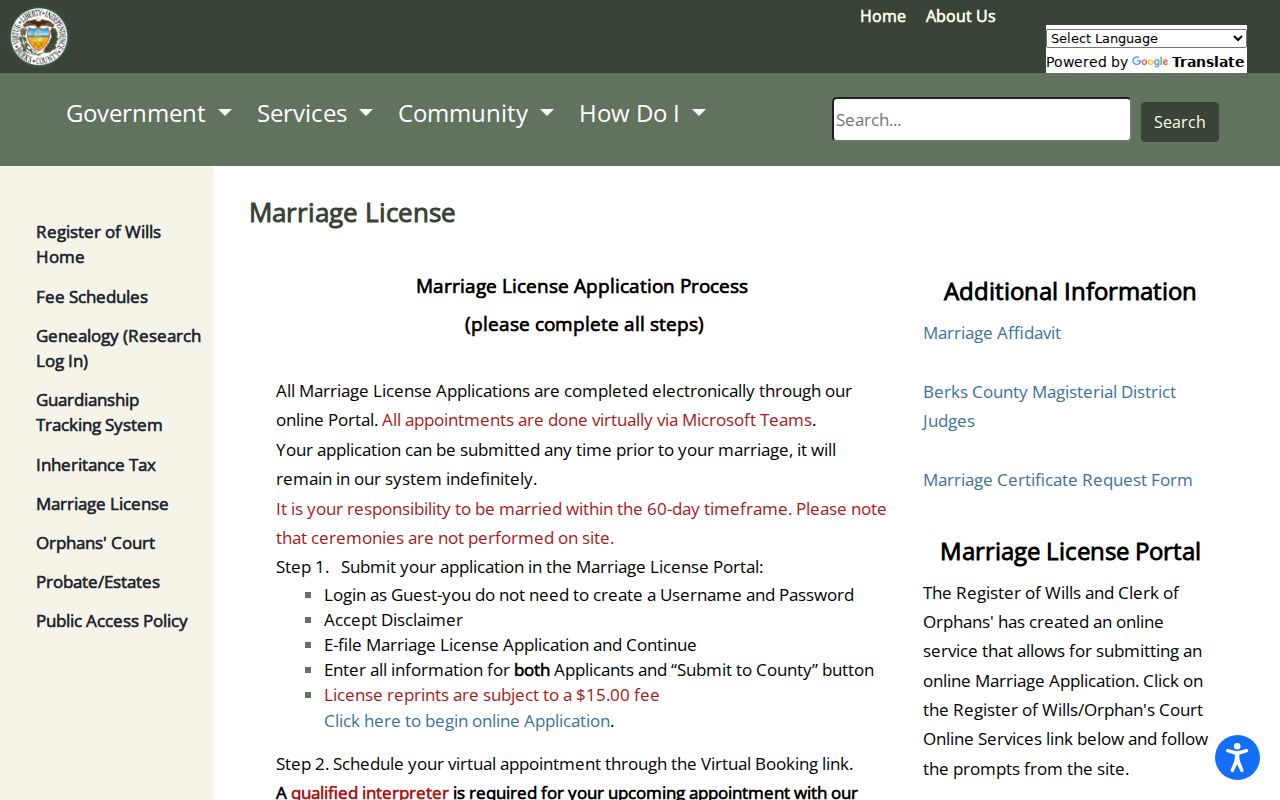
Match a marriage record to names, dates, and related records before treating it as evidence for a particular address.
Berks County House History and Lawful Use
House-history help is distributed across three local repositories rather than a formal county program. RPL offers maps, telephone directories, city and suburban directories, newspapers, and reference help. BHC provides city directories, maps, newspapers, and focused research service. BCGS holds census, newspapers, and maps.
End a trail with what the records actually support. A deed proves a recorded property event, a directory can show a listing, and a census or notice supplies dated context. When those records disagree, retain the uncertainty instead of turning an old address into a claim about a person.